
Brand codes as a shortcut to a strong brand on social media
Petr Mayer
In a saturated environment of social networks, brands compete for attention and a place in the minds of consumers. The winner is the one who carves out more neural connections for themselves and builds higher mental availability. Therefore, it's not just about being different, but about standing out and being distinctive. Distinctiveness over differentiation. In this regard, brand codes play a key role. Let's show how to work with them in your social media communication.
Shortcut to the customer's mind
Brand codes (or elements) facilitate the brand's journey into the customer's mind. Their main task is to evoke the brand name, enable instant recognition, and increase memorability. Every time you use codes in your communication, customers will more easily associate the message with your brand. And this is crucial for building mental availability.
The basic brand elements include the brand name, logo, font, color palette, tagline, brand ambassador, jingle, musical composition, and symbolic shapes. For a brand that aims beyond social networks, it is important to have a wide range of brand codes to utilize across different media – for example, in radio advertising, a character or logo is of no use to you; you need a jingle.

Source: Building distinctive brand assets (Jenni Romaniuk)
How to build strong brand codes
Imagine you are at the stage where you have a set of your brand elements. How to make them really strong representatives of your brand that you can use individually and that will help build mental availability (and ultimately improve sales)? You need to show your codes in connection with the brand name, to the largest possible part of category buyers, consistently and prominently. Let’s look at this step by step:
Wide reach among category buyers – Just like the brands themselves, brand codes are built by regularly showing them to the largest possible portion of customers in your category. Use brand-building platforms with wide reach for this.
Prominent execution – This concerns how brand codes are placed and presented in specific social media formats. Focus on making sure the elements are prominent, clearly visible in all communications, and that they appear close to the brand name.
Consistency – This helps to reinforce codes in customers' minds. Use your brand elements consistently across all formats and at every moment to strengthen the neural connection in consumers' minds. Just don’t try to be original every time.

Basic brand codes of McDonald’s.
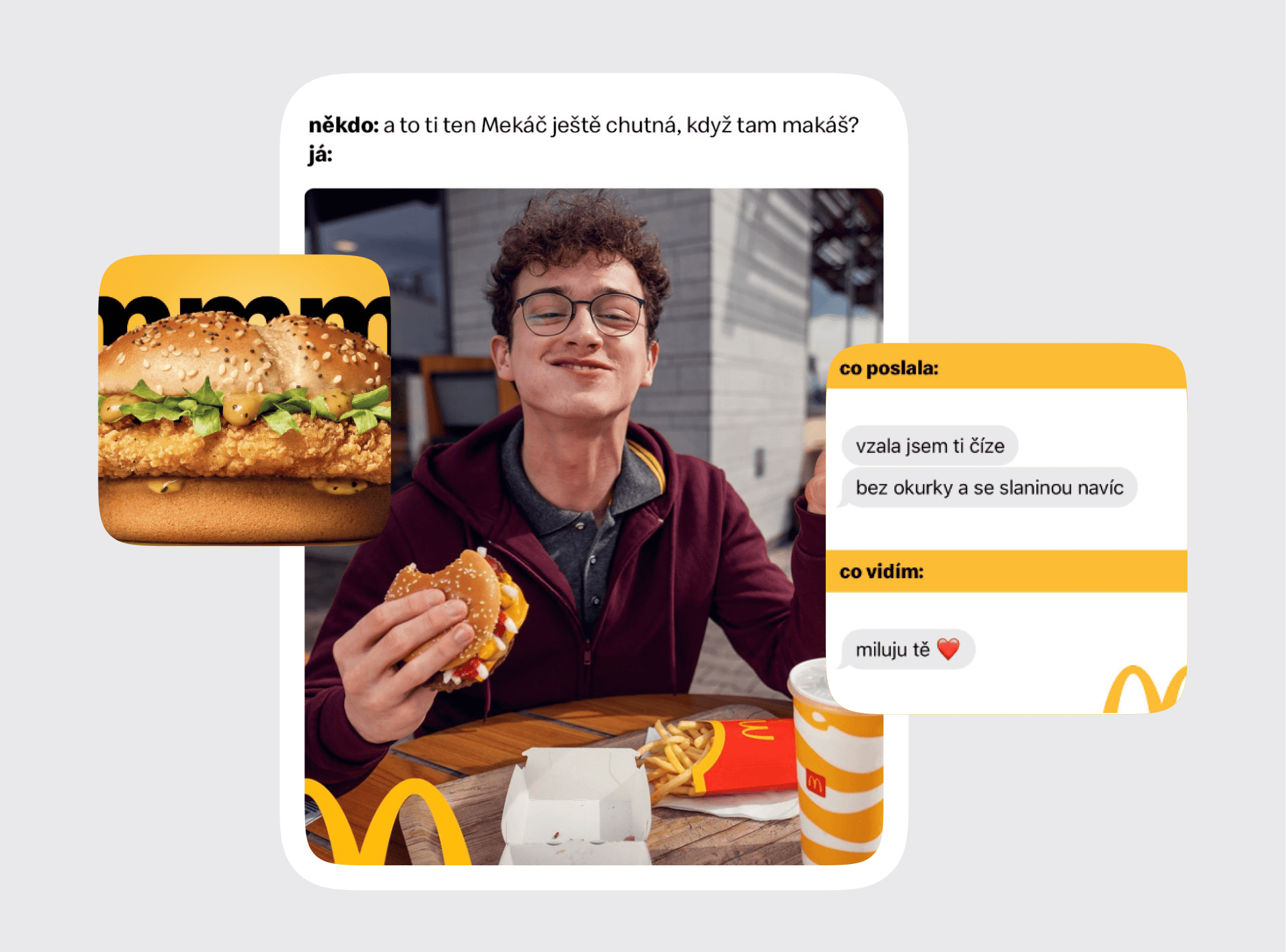
Using the already established brand codes of McDonald’s on social networks. Even a product can function as a brand code if it is well-known enough.
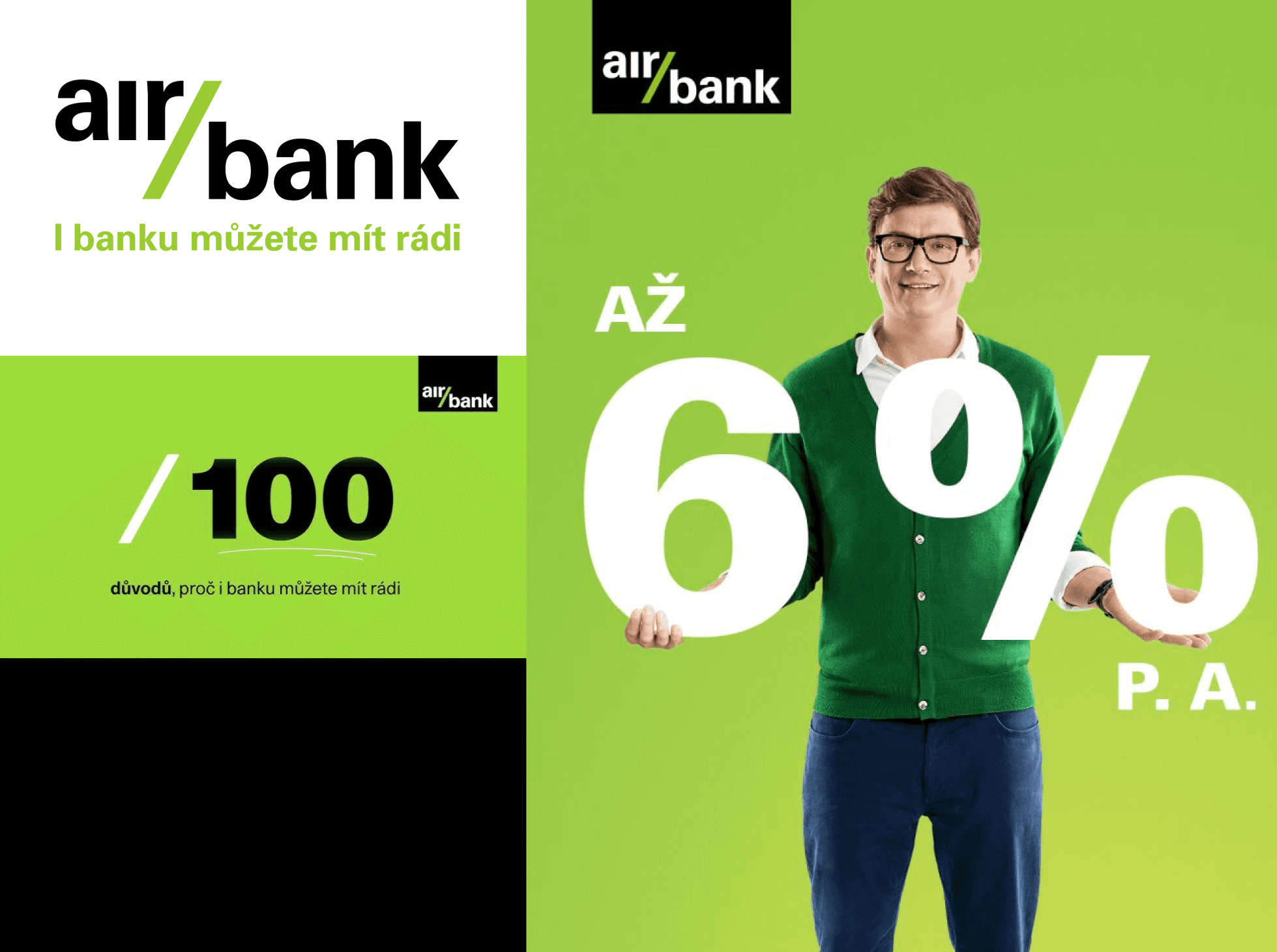
Basic brand codes of Air Bank

Using already established brand codes of Air Bank on social networks
2 characteristics of strong brand codes
A few months of diligent brand code building should lead to the first measurement. You need objective numbers regarding the current strength and potential of your codes, which will tell you if you are on the right track. Here we recommend using the practical framework Jenni Romaniuk (publication Building distinctive brand assets), which works with two variables: fame and uniqueness.
Fame refers to the recognition of a specific brand element. It indicates how large a percentage of people who purchase in your category associate a specific brand element with your brand. For example, fame of 45% means that 45% of consumers in your category will associate that brand element with your brand. At the same time, they may also associate it with the competition. You can build the fame of your brand elements through activities that we mentioned earlier – connecting the code with the brand name, having a broad reach within the target group, and notable execution.
Uniqueness relates to whether a specific element is perceived as unique to a given brand and is not interchangeable with any other element from competing brands. A high uniqueness score means that your brand is likely to be one of the few that comes to customers' minds when they come across that particular brand code. For example, uniqueness of 60% means that 60% of all associations in the minds of consumers regarding that brand element belong to your brand, while 40% of associations point to a competing brand. Unfortunately, uniqueness values are generally beyond the brand's influence, as they largely depend on what your competition is doing in terms of brand elements.
Distinctive assets grid
By combining different scores of Fame and Uniqueness, we obtain a matrix of four quadrants (the so-called Distinctive Asset Grid), which maps the current performance of your brand codes and predicts their potential. It will help you in strategic decision-making about whether it makes sense to continue investing in current brand codes or if it would be more effective for the brand to develop new codes.
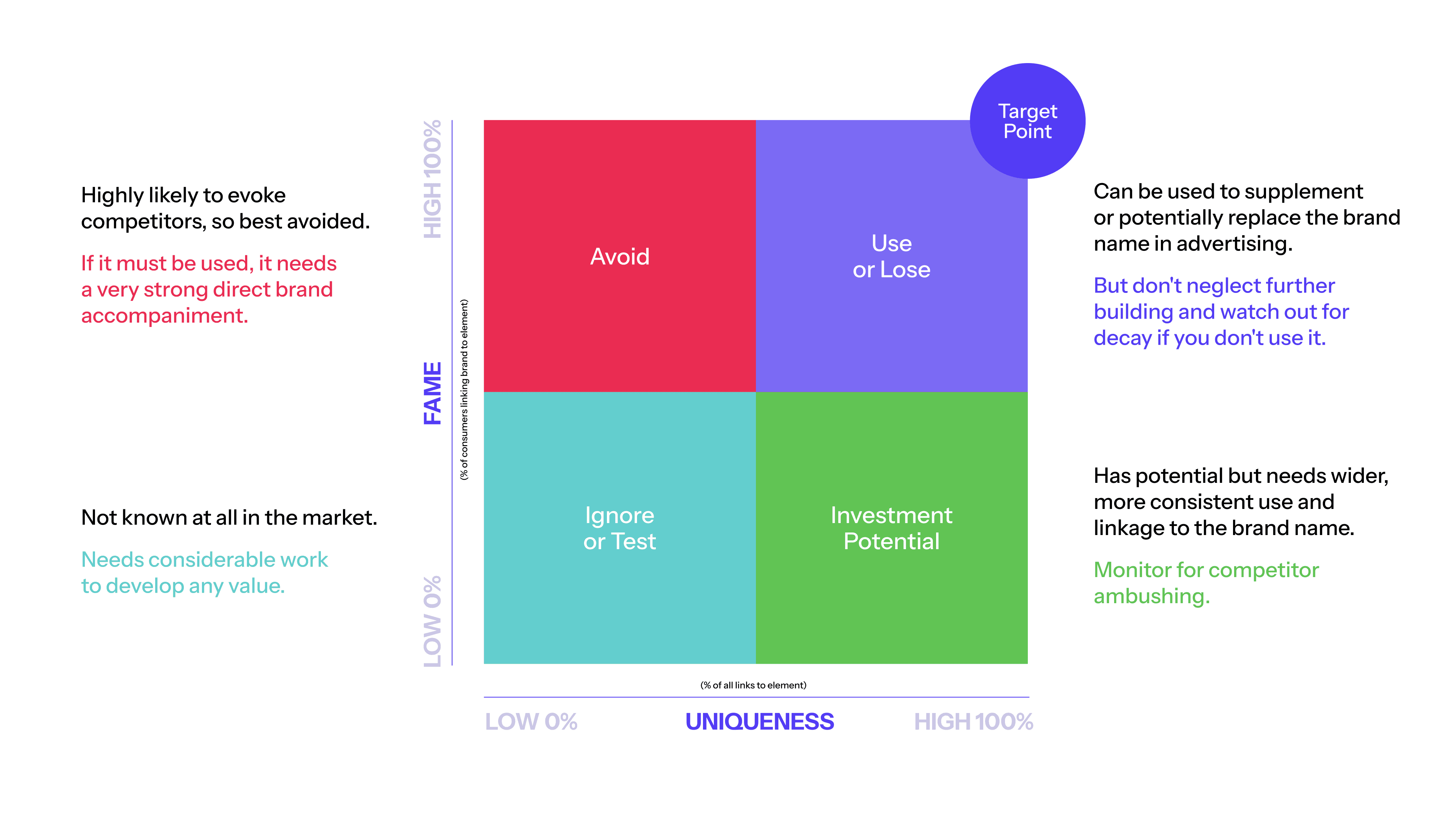
Source: Ehrenberg-Bass Institute
Ideally, you want to be in the upper right quadrant Use or Lose(both Fame and Uniqueness are above 50%). If you approach 100% values for both variables, you have built strong brand elements, which you can use as a perfect substitute for the brand name in a large part of your communications. But don’t forget that you also need to continuously build brand codes for new consumers coming into your category. If you are in the quadrant with values slightly above 50%, you need to continue building the Fame of your elements by using them together with your brand name.
Another interesting quadrant that indicates the potential of your brand codes is the bottom right Invest potential (Uniqueness is above 50%, Fame is below 50%). Consumers largely associate your brand codes only with your brand and do not confuse them with competitors – good job! Now you need to focus on a wide reach to increase the Fame of your brand codes among as many category buyers as possible. Practically, this looks like placing the brand code close to the brand name in all your communication activities. In video formats, it’s best to place it at the beginning and repeatedly throughout. Sure, sometimes it can feel a bit forced, but memory traces are created only through consistent repetition of the same thing over and over.
On the other hand, you won't be happy about the quadrant Avoid solo use (Fame is above 50%, Uniqueness is below 50%), where your brand elements may have high recognition, but due to interchangeability, your competition partially reaps the benefits. These are typically generic codes tied to a specific category – blue rounded shapes for yogurts, red color for ketchup, or the silhouette of a bird for airlines. If your brand has a smaller market share than competing brands with similar brand elements, you should better abandon the current brand elements and start building new ones.
If you are a new brand and score in the quadrant Ignore or test, you don’t need to despair immediately. Low Fame and Uniqueness values may reflect simply that not many people know about you yet – they don’t know you exist, let alone what your brand codes are. However, if you have been in the market for a while, use brand elements consistently in your communication, and reach a large part of category buyers, then you’ve likely bet on the wrong elements. Not all assets have the potential for memorability – they may be too subtle or too sophisticated. This is where the work of a creative professional slash neuroscience expert comes into play, who will design new, memorable brand codes.
We have defined brand codes for Wobenzym, Strike TV, or Yolab. Should we create them for you too?


 Download our presentation